
 Log in
 Start Free Trial
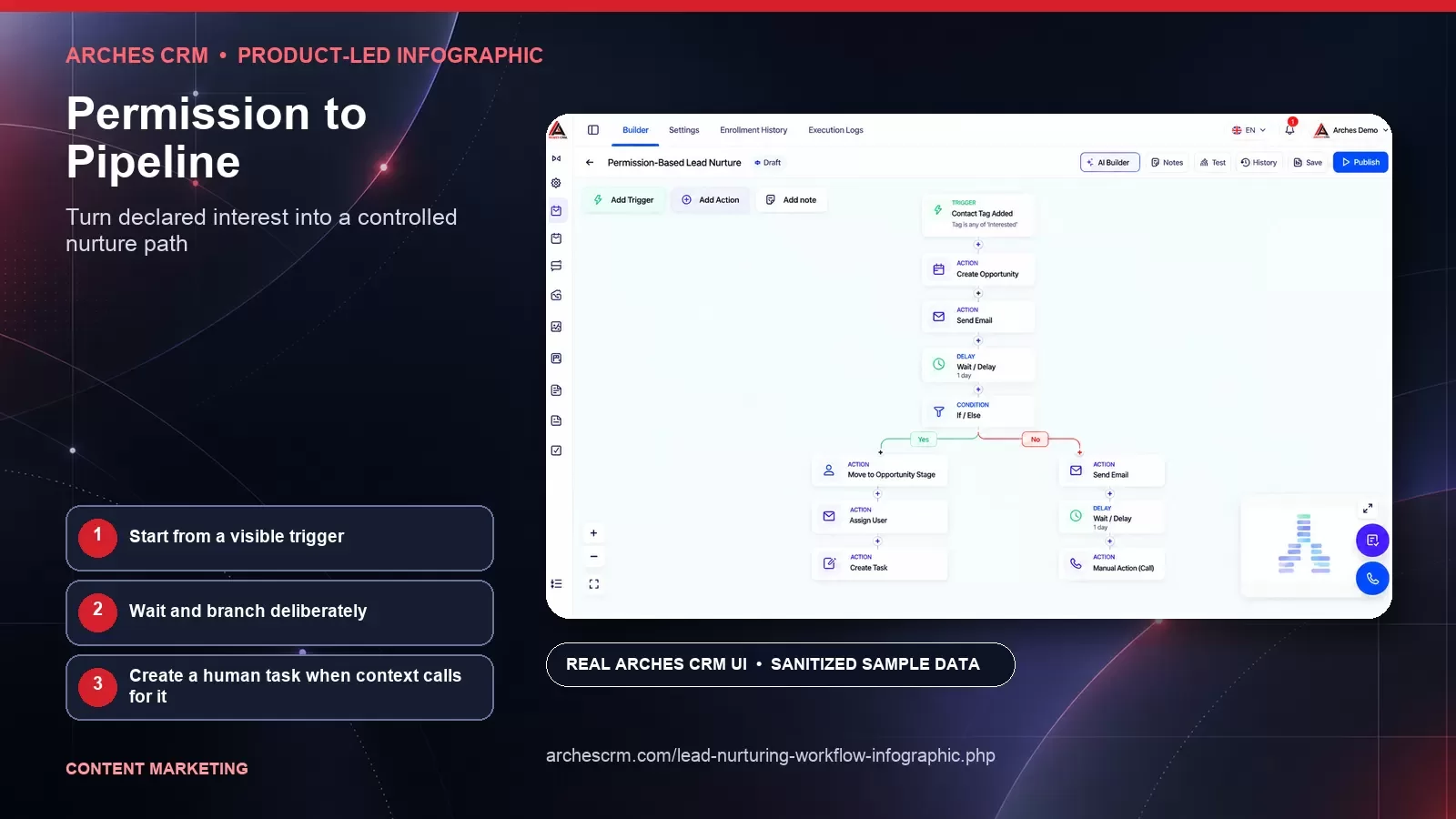
Turn declared interest into a controlled nurture path
Nurture with sequenced tasks instead of generic blasts. These authentic Arches CRM application views use sanitized synthetic sample data and are specific to this workflow — not a repeated generic screenshot set.


Start from a visible trigger
Wait and branch deliberately
Create a human task when context calls for it
Why this framework matters
A subscription is a request for continued value, not an invitation to treat every reader as sales-ready. The conversion opportunity comes from learning which problems the audience chooses to explore, making preferences easy to express, and recognizing when a person asks for help with a real business decision.
When teams rush subscribers into aggressive outreach, engagement can fall and the original value exchange breaks. When they never define an intent path, qualified readers stay invisible. The right system respects the subscription promise while creating clear, optional steps toward a useful conversation.
Permission and declared interest guide the path from content to conversation
Swipe or scroll to view the full diagram.
Read the infographic transcript
- Set expectations: Make the value, topic, frequency, sender, and likely next steps clear at signup. Do not change the relationship silently after the person subscribes.
- Honor declared interests: Use the person's own topic choices and stated problems as context. Avoid turning isolated opens or page views into hidden intent conclusions.
- Offer cadence control: Let subscribers choose or adjust how often they hear from the brand. Coordinate programs so one person does not receive overlapping messages.
- Respect channel choice: Use the channel the person selected and obtain any additional permission needed before expanding the relationship to another channel.
- Deliver useful content: Answer the chosen business question with clear, original material. Offer a deeper step without making it the price of receiving the promised value.
- Learn from replies: Treat direct questions, objections, requests, and preference changes as stronger context than passive activity. Preserve the exact wording and promised response.
- Apply suppression: Honor opt-outs, invalid addresses, channel restrictions, and internal exclusions before the next activation. Suppression should remain authoritative across tools.
Work through the framework
Set expectations
Make the value, topic, frequency, sender, and likely next steps clear at signup. Do not change the relationship silently after the person subscribes.
Honor declared interests
Use the person's own topic choices and stated problems as context. Avoid turning isolated opens or page views into hidden intent conclusions.
Offer cadence control
Let subscribers choose or adjust how often they hear from the brand. Coordinate programs so one person does not receive overlapping messages.
Respect channel choice
Use the channel the person selected and obtain any additional permission needed before expanding the relationship to another channel.
Deliver useful content
Answer the chosen business question with clear, original material. Offer a deeper step without making it the price of receiving the promised value.
Learn from replies
Treat direct questions, objections, requests, and preference changes as stronger context than passive activity. Preserve the exact wording and promised response.
Apply suppression
Honor opt-outs, invalid addresses, channel restrictions, and internal exclusions before the next activation. Suppression should remain authoritative across tools.
How to apply it
Write down the subscription promise and compare it with every automated message and sales trigger. Remove paths that change the relationship without a clear signal. Add optional topic and frequency controls so readers can shape the experience instead of choosing only between full volume and unsubscribe.
Define which actions reflect education and which require human review for possible buying intent. Use CRM records to preserve declared context, not to manufacture intent from isolated behavior. Test the handoff by asking whether a seller can explain why contact is relevant in one accurate sentence.
What to review in your own process
Use first-party evidence from your own workflow. Define each measure before collection, preserve unknowns, and review quality with the teams responsible for the handoff.
- Subscribers receiving the topic and cadence they selected
- Direct requests captured with their original content context
- Human follow-ups that reference a declared need rather than surveillance
- Nurture exits, pauses, and preference changes honored correctly
Common questions
Is an email subscriber automatically a sales lead?
No. A subscriber has asked for a particular content relationship. Sales readiness needs additional evidence such as a relevant business need, fit, and a direct action or request that supports a conversation.
Which subscriber behaviors show buying intent?
Declared actions are clearest: asking for an evaluation, sharing a current problem, requesting pricing context, or scheduling a conversation. Passive behaviors can guide content but should not be treated as conclusive on their own.
How can a CRM help subscriber nurturing?
A CRM can organize preferences, declared interests, requests, ownership, and outcomes when configured for that purpose. Confirm that consent, channel rules, and retention practices match your obligations and the subscriber's choices.
Primary references and review record
Editorial framework: This is an Arches CRM editorial framework. Its citations support related implementation, regulatory, measurement, privacy, accessibility, provider, or claim guidance; they do not independently validate the framework or prove a particular result.
- Information Commissioner's Office: Electronic mail marketing rules and bought-in lists (accessed 2026-09-27)
- Federal Trade Commission: CAN-SPAM Act: A Compliance Guide for Business (accessed 2026-09-27)
Author: Arches CRM Editorial Team · Reviewer: Arches CRM Revenue Operations Review · Last reviewed: 2026-09-27
Continue exploring
Related Arches CRM whitepapers
Put the framework into a real CRM workflow
Use your own records, definitions, and review process to evaluate whether Arches CRM fits the way your team works.
Start your 7-day trial